












Key Takeaways
- Consistent inspection and maintenance prevent costly accidents and breakdowns.
- Mastering load calculations and safe rigging techniques is vital for employee and equipment safety.
- Ongoing education and strict adherence to policy are foundational to any successful rigging operation.
Table of Contents
- Understanding Rigging Hardware
- Pre-Lift Planning and Inspection
- Proper Load Handling and Securement
- Communication and Signal Systems
- Common Hazards and How to Avoid Them
- Training and Certification Requirements
- Regulatory Standards and Compliance
- Conclusion
In any industrial setting, ensuring safety when working with rigging hardware is a critical component of day-to-day operations. Proper rigging practices not only prevent workplace accidents but also boost productivity and protect valuable equipment. When equipping your facility or team, understanding where to source reliable rigging supplies near me is crucial to maintaining efficiency and compliance.
Industrial teams rely on rigging hardware for material handling, lifting, and securing heavy loads. Poor handling or lack of oversight can lead to significant hazards, making it essential that everyone involved in these operations adheres to best safety practices. These principles help industries such as construction, manufacturing, and shipping minimize downtime and foster a culture of safety and accountability within their workforces.
Routine maintenance and careful planning substantiate the foundation of safe rigging operations. By inspecting equipment before use and ensuring the correct gear is selected for each unique job, organizations can mitigate risks and preserve not only personnel well-being but also overall operational integrity.
Additionally, fostering open channels of communication throughout every lift ensures coordination and helps avoid missteps that could result in injury or loss. Comprehensive training and consistent diligence are the hallmarks of successful, safe rigging teams. For more information on why these best practices are essential across industries, see OSHA’s coverage of rigging equipment hazards.
Understanding Rigging Hardware
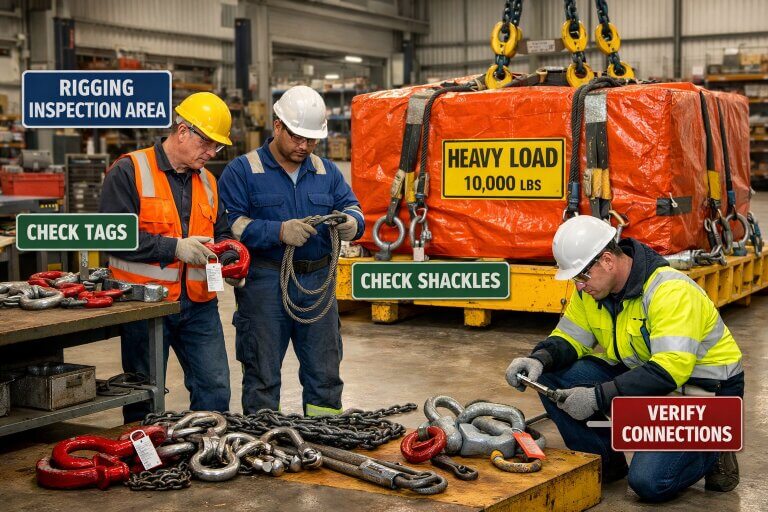
Rigging hardware encompasses components designed specifically for securing, lifting, and moving heavy items. These include:
- Shackles: U-shaped connectors for attaching multiple rigging elements.
- Slings: Flexible ropes, chains, or straps for supporting loads during lifting.
- Hooks: Critical attachments, often with added safety latches to prevent unintentional release.
- Hoists: Powered or manual mechanisms that facilitate smooth vertical or horizontal movement.
The right selection and application of these elements ensure job-specific suitability and mitigate potential dangers. To better understand the technical variations and safe applications of each component, consult resources from manufacturers and trusted industry authorities, such as Assembly Magazine, for in-depth evaluation and system integration advice.
Pre-Lift Planning and Inspection
Safe operations start long before the lift takes place. Planning includes examining each load for weight, balance, and movement tendencies. Here are essential steps:
- Load Assessment: Analyze load shape, mass, and the position of its center of gravity. These factors dictate the required hardware.
- Rigging Hardware Inspection: Before every use, examine slings, shackles, and hooks for corrosion, deformation, or excessive wear. Replace any questionable hardware immediately.
- Lift Path Planning: Make sure the lift zone and path are clear. Identify nearby obstructions and review site-specific hazards, including overhead power lines or unstable ground surfaces.
Preventing mechanical failure through inspections is supported by educational materials such as the Rigging Safety Guide, which provides detailed checklists and visual cues to identify issues in rigging equipment.
Proper Load Handling and Securement
Improper load management significantly increases the risk of injuries. The key is ensuring all lifting gear is matched to the load capacity and that every load is completely stable before and during movement. Best practices include:
- Selecting Suitable Slings: The type (wire rope, synthetic, or chain) should match the object’s specific weight and shape.
- Even Load Distribution: Always balance the load and use multiple points of contact if possible to prevent tilting or uncontrolled shifting.
- Secure Attaching: Double-check all connections before every lift to ensure secure engagement and proper alignment.
For an expansive look at the safest strategies for every load type, reference the Safe Rigging and Lifting Best Practices resource, which covers everything from sling selection to anchoring techniques for complex rigging scenarios.
Communication and Signal Systems
Miscommunication during lifts is a leading cause of workplace accidents. To mitigate this, crews should:
- Establish Standardized Signals: Both hand signals and radio protocols must be standardized across all sites. This ensures everyone responds quickly and correctly to commands.
- Elect a Signal Person: Assign a trained, clearly identifiable individual to direct all lifts and serve as the communication bridge between operators and those on the ground.
- Clear Lines of Sight: Always maintain visual or radio contact between operators and the signal person to avoid ambiguity when instructions are shared.
Having an organized communication system in place prevents chaos during complex lifts and is frequently reinforced during safety audits and industry training programs.
Common Hazards and How to Avoid Them
Identifying and managing common risks is key to incident reduction. Major hazards include:
- Exceeding Working Load Limits: Strict adherence to manufacturer-rated capacities prevents catastrophic equipment failure.
- Improper Angles: Incorrect sling angles can dramatically increase load on the hardware, so always position slings according to technical guidelines.
- Adverse Environmental Conditions: Wind, rain, and shifting ground conditions should be accounted for during every lift, as these can affect both stability and visibility.
By continuously evaluating the environment and proactively recognizing hazards, injuries, and losses can be significantly reduced. For real-world case studies and examples of hazard mitigation, consult resources on EHS Today.
Training and Certification Requirements
Competency in rigging is not innate and must be established through rigorous, ongoing training. Critical approaches include:
- Structured Training Programs: Training should cover equipment types, risk mitigation, regulatory requirements, and emergency procedures.
- Certifications: Certification from recognized authorities, such as the National Commission for the Certification of Crane Operators (NCCCO), demonstrates validated competence and compliance.
- Refresher Courses: Regularly scheduled re-training sessions ensure everyone remains up to date with current standards and technology advancements.
Employers who invest in workforce education reduce incident rates and deliver safer outcomes for every rigging scenario.
Regulatory Standards and Compliance
Following federal and industry-specific guidelines is not optional; it is a legal mandate and a practical necessity. Essential regulations include:
- OSHA Standards: The Occupational Safety and Health Administration sets federal guidelines for materials handling, equipment use, and required inspections.
- Industry Codes: Bodies such as the American Society of Mechanical Engineers (ASME) publish detailed protocols for safe rigging practices to standardize operations across industries.
- Internal and External Audits: Frequent reviews of procedures and documentation help catch lapses in compliance and keep teams ready for any regulatory inspection.
Proactive compliance management limits exposure to penalties, litigation, and costly operational shutdowns. For a full summary of regulatory rigging requirements, see the CDC’s insights on workplace safety culture.
Conclusion
By emphasizing strong pre-lift planning, proper equipment use, clear communication, robust training, and full adherence to safety regulations, organizations can enhance the safety and effectiveness of every rigging operation. Cultivating a safety-first culture will protect your team and assets, drive operational excellence, and uphold your organization’s reputation in any industrial setting.