










Tooling does not always need to be machined from metal. For short runs, assembly aids, drill guides, inspection fixtures, and other shop-floor tools, conventional fabrication can be hard to justify. That is one reason fused deposition modeling 3D printing has found a practical place in low-volume manufacturing. It lets engineers produce useful tooling directly from digital files, revise it quickly, and replace it without waiting for new machining work. InHuntsville’se additivemanufacturinge projects, the same question comes up often:Doess the tool need to last for years, or does it simply need to do one job well for a limited production run?
FDM Works Best When the Tool Does Not Need to Be Metal
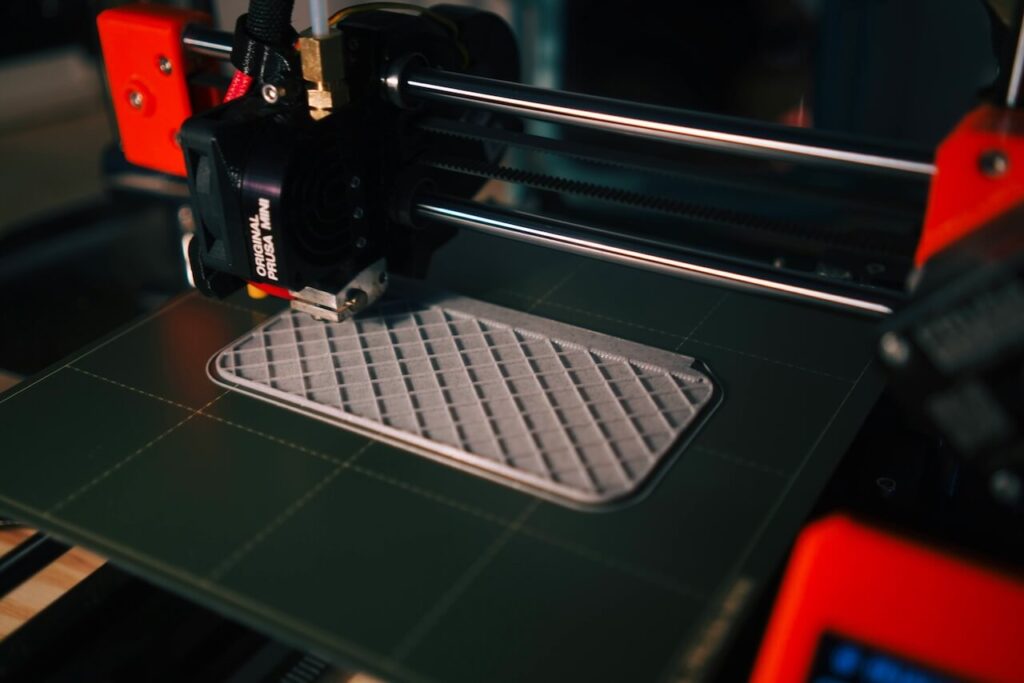
Fused deposition modeling builds a part by laying down thermoplastic material layer by layer. That makes it useful for many non-load-bearing or moderate-load tools used around production equipment. Examples include soft jaws, assembly nests, trim fixtures, protective covers, drill templates, gauges, and positioning aids.
The key is matching the tool to the job. If it will see high heat, heavy clamping force, severe abrasion, or repeated impact, a polymer tool may not be the right choice. But if the main requirement is holding, locating, guiding, or protecting a component, fused deposition modeling can avoid machining a tool that is far more durable than the application requires.
Short Runs Make the Economics More Attractive
A dedicated fixture for a large production program can justify machining, hardened inserts, and long-term durability. A fixture needed for a dozen parts is different. In that case, the setup cost can dominate the job.
Additive manufacturing changes that equation because the tool is produced from a CAD file without the same level of dedicated tooling preparation. A manufacturer can print a fixture, put it into service, and update the design if operators find that a handle needs to move or a locating surface needs more clearance. For rapid manufacturing 3D printing, making a useful production aid without building another production aid first is a major advantage.
Fast Revisions Matter on a Busy Shop Floor
Tooling problems are often small but annoying. A part is hard to load. A clamp blocks access. An operator keeps adding tape or shims to make a fixture work. Those issues may not justify a formal redesign if the tool is expensive to remake.
Industrial 3D printing makes small changes easier to act on. An engineer can revise the model, print another version, and compare how it performs in use. That makes fused deposition modeling 3D printing especially useful during pilot production, process development, and low-rate manufacturing where the tooling is still being refined along with the part.
Printed Tooling Can Reduce Weight and Handling Effort
Metal fixtures can become heavy because they are machined from solid stock or built from thick plates and brackets. Weight may not matter when a tool stays bolted to one machine, but it matters when workers lift or reposition it throughout the day.
FDM tooling can use hollow sections, internal ribs, and geometry that would be tedious to machine. The result can be easier to handle while still being stiff enough for the intended task. Designers can also add built-in grips, part labels, cable paths, or protective surfaces directly into the model. Those simple details can make a shop tool much easier to use.
Knowing When FDM Has Reached Its Limit
There is a point where polymer tooling stops being the practical answer. High mechanical loads, elevated temperatures, tight wear surfaces, or demanding dimensional requirements may call for machined metal tooling instead. Sometimes a hybrid approach works better, with a printed polymer body and metal inserts at wear points or threaded locations.
Other additive processes serve different needs. Metal 3D printing can produce tooling and production components that require higher strength or temperature resistance. Powder bed fusion 3D printing, for example, is better suited to certain metal geometries that would be difficult to create with conventional machining alone. For teams evaluating metal 3D printing Huntsville AL capabilities, the decision often depends on the material, finish, tolerance, and service conditions the tool must handle.
Choosing the Process Around the Actual Tooling Problem
The best reason to use FDM for tooling is simple: it solves a production problem without adding more cost or complexity than necessary. A temporary inspection fixture does not need the same material or life expectancy as a permanent machining fixture. Likewise, a lightweight assembly nest may benefit more from quick revision and easy handling than from being made of metal.
For more demanding additive work, specialized engineering support can help determine where polymer tooling ends and metal additive manufacturing begins. Additive Manufacturing Engineering works with metal additive manufacturing, metal 3D printing, design optimization, prototyping, production, structural CAD, and metallurgy-related analysis. That type of support can be useful when a tooling project grows beyond basic FDM and begins to involve complex metal structures or production-level engineering decisions.
FDM makes the most sense when speed, flexibility, and low tooling volume matter more than maximum durability. Used in the right place, it can keep a line moving, shorten fixture development, and give engineers room to improve tooling without treating every change like a major capital project.