











Introduction
Evidence is the foundation upon which all legal strategies and arguments stand in civil litigation. Without credible evidence, even the most compelling legal theories may fall flat before a judge or jury. The process of gathering, preserving, and presenting evidence is a carefully choreographed aspect of civil procedure, often shaping the resolution of disputes. For parties pursuing or defending a claim, working with a team experienced in handling evidence is vital—such as the professionals at martinlawfirmpc—to ensure every critical fact is established and supported.
The strength of a case in civil court depends not just on having the law on your side, but on the ability to prove what actually happened. This obligation rests on the strategic use and admissibility of evidence. Understanding the nuances of evidence can make the difference between a favorable verdict and an unfavorable outcome, making it essential for anyone involved in litigation to know the basics and best practices for success.
Types of Evidence in Civil Litigation
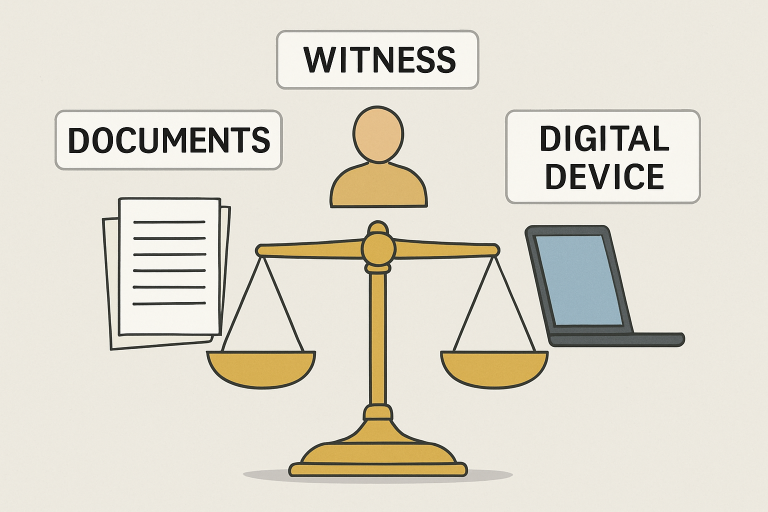
- Documentary Evidence: Central to most cases, documents such as contracts, business correspondence, medical records, and financial statements serve as written proof of incidents and transactions. Their clarity and provenance often influence how a court interprets the facts.
- Witness Testimony: Direct accounts from individuals who saw, heard, or participated in events relevant to the case. Credibility, consistency, and firsthand knowledge are key criteria for reliable testimony.
- Physical Evidence: Tangible objects, ranging from defective products to photos or video footage, can corroborate, contradict, or clarify the details surrounding a dispute.
- Demonstrative evidence, such as visual presentations—such as diagrams, models, maps, and simulations—is increasingly common in complex cases where facts must be clearly presented to a judge or jury.
Admissibility of Evidence
Not all evidence brought to court will be allowed. Courts use specific legal standards to determine what a judge or jury can consider. First, evidence must be relevant; that is, it must have a direct bearing on the claims or defenses in the case. Second, evidence must be authentic, meaning it is what it purports to be—verified by testimony or documentation. Perhaps the most significant barrier is the Hearsay Rule, which generally excludes out-of-court statements offered to prove the truth of the matter asserted, unless one of several exceptions applies. To better understand these exceptions, the LawDistrict’s Legal Dictionary provides clear guidance for non-attorneys.
Burden of Proof and Standards
In civil cases, the party bringing the claim—the plaintiff—carries the burden of proof. Unlike criminal trials, where proof must be “beyond a reasonable doubt,” civil litigation typically requires proof “by a preponderance of the evidence.” This means proving that something was more likely to have occurred than not. In specific actions, such as fraud or cases seeking punitive damages, the higher “clear and convincing evidence” standard is applied. Meeting these standards hinges on how sound evidence is collected, preserved, and delivered.
Strategies for Presenting Evidence
- Organization and Preparation: Success begins well before trial—lawyers organize evidence into clear, logical presentations, allowing for easy reference and compelling storytelling.
- Direct Examination: This is the initial questioning of a party’s own witness, used to elucidate facts in support of the case. Clarity and factual detail are vital.
- Cross-Examination: During cross-examination, opposing counsel aims to identify inconsistencies or undermine the other side’s evidence. Effective cross-examination can tip the scales in close cases.
Technology’s Impact on Evidence
Technological advances have fundamentally changed the way evidence is uncovered, shared, and presented in civil cases. Electronic Discovery (E-Discovery) has become crucial, as most business and personal communications now exist in digital form. The ability to locate, process, and analyze emails, texts, and digital records can reveal key pieces of evidence that were previously unseen in the paper era. Increasingly, Digital Forensics plays a pivotal role—experts can recover deleted files, trace digital footprints, and provide crucial context for what is presented in court. For more information on the legal and procedural changes brought about by technology, the American Bar Association’s overview of e-discovery provides additional insights.
Expert Witnesses
Some cases require explanation of complex technical, medical, or scientific issues. Expert witnesses bring specialized knowledge that helps judges and juries understand complex technical matters. Their opinions, backed by credentials and experience, can clarify causation, quantify damages, and address contested scientific concepts. Engaging the right expert witness can be a pivotal step in winning or defending a case.
Conclusion
Deliberate and thoughtful management of evidence is a crucial skill for both litigants and lawyers. Understanding the types of evidence, rules governing their use, and strategies for presentation provides a significant edge in civil court proceedings. From the earliest stages of a dispute through to trial, meticulous attention to evidence can solidify your claims, weaken your opponent’s arguments, and directly affect case outcomes in today’s evolving legal landscape, where technology and expertise are transforming the nature of proof. Staying informed and prepared remains of paramount importance.