












Understanding Lost Wages in Personal Injury Claims
When a sudden injury disrupts your ability to work in Las Vegas, the financial impact can be immediate and significant. Lost wages broadly refer to all the income you were unable to earn as a direct result of your injury. This can encompass your regular salary or hourly pay, missed overtime opportunities, bonuses, and even commission-based earnings. In some cases, you may also end up using vacation or sick days to cover time off, which should be included in your calculation of total lost income.
If you work for yourself, determining lost earnings may require additional effort to show what you would have earned had you not been injured. Because lost wages are a significant component of most personal injury damages, documenting every aspect is crucial for obtaining fair compensation. Working with an experienced law firm like blakefriedmanlaw can help ensure all your lost wage elements are included in your claim.
Lost wages may also cover missed raises or lost opportunities linked to your absence from work. Understanding all these aspects is crucial for accurately assessing your full financial loss after an injury in Las Vegas.
Proper calculation of lost wages not only includes your current out-of-pocket losses but sets the groundwork for analyzing how the injury may affect your future earning capacity.
Insurance adjusters and courts require clear evidence of your lost income to award damages in a Las Vegas injury case. Essential documents typically include your most recent pay stubs, tax returns, and a letter from your employer confirming your role, rate of pay, and the time you missed due to your injury. If your job involves bonuses, tips, or commissions, you may also need historical records demonstrating your average earnings in these categories.
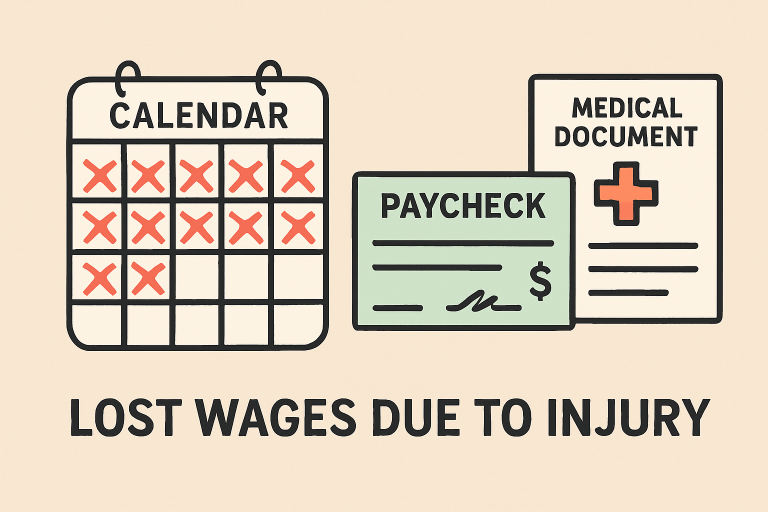
Medical documentation is another important requirement. Doctors’ notes or official medical records verifying your inability to work are often necessary to bridge the causal link between your injuries and missed work time. This comprehensive documentation helps validate your claim and minimizes disputes with opposing insurance carriers or defense attorneys.
Calculating Lost Earning Capacity
When an injury causes long-term or permanent disability, the impact on your ability to earn income in the future—known as “lost earning capacity”—is factored into your compensation. This much more complex calculation considers your expected career trajectory, age, education, skills, and the nature and severity of your injury. For example, a young worker with a promising career path who can no longer pursue their chosen field might claim significant lost earning capacity.
Calculation of lost earning capacity often involves vocational rehabilitation experts or economists who estimate what you could have reasonably earned had the injury not occurred. Their testimony is commonly used to support these claims, particularly in cases where the injury results in long-term or permanent work restrictions.
The Role of Comparative Fault in Nevada
Nevada courts apply a modified comparative fault rule in personal injury cases. If you share any blame for the incident causing your injury, the court will reduce your total compensation by your percentage of fault. For instance, if you are found 20% at fault, your damage award is reduced by 20%. However, if your responsibility for the accident is judged to be more than 50%, you may be barred from recovering any damages at all.
Because these calculations directly impact your lost wage recovery, presenting strong evidence and minimizing your assigned fault is crucial for maximizing your compensation.
Impact of Non-Economic Damages
While lost wages are economic damages, many Las Vegas personal injury claims also factor in “non-economic” damages—such as pain and suffering, emotional distress, and loss of enjoyment of life. Calculating these typically involves either the multiplier method (where your economic losses are multiplied by a number based on injury severity) or a per diem calculation (assigning an amount for each day you endure pain or hardship).
Although these non-economic damages are separate, they often hinge on the calculation of your lost wages, underscoring the importance of thorough and accurate documentation.
Seeking Legal Assistance
Calculating and recovering lost wages in Las Vegas injury cases can be complex, involving varied documentation, expert assessments, and careful legal navigation. Consulting with a skilled personal injury attorney can help you avoid pitfalls, build a comprehensive claim, and ensure that every aspect of your financial loss is recognized. Attorneys well-versed in Nevada’s laws will guide you through the entire process, fighting for the compensation you deserve and allowing you to focus on your recovery.
Final Thoughts
Accurately assessing and documenting lost wages in Las Vegas injury cases is key to securing fair compensation. Being diligent about collecting paperwork, actively considering both immediate and future earning impacts, and understanding Nevada’s comparative fault law will help give your claim the strongest foundation possible. Professional legal guidance can further ensure that nothing falls through the cracks, ensuring your financial well-being as you recover from your injury.