













What is a Professional Certification and How Does It Differ from Other Credentials?
Are you aiming to advance your career or prove your expertise? In today’s fast-evolving job market, standing still is not an option. Professional certifications offer a powerful way to improve your skills and demonstrate your commitment to a specific field. They act as a clear signal to employers that you possess specialized knowledge and are ready to contribute at a high level.
This comprehensive guide will help you understand professional certification. We will explain what these credentials are and how they differ from other types of qualifications. We will also explore the significant benefits they bring to your career and salary.
Furthermore, we will show you the steps to earn a certification, highlight some of the most sought-after options, and guide you on how to proudly display your new achievements. Prepare to open up your career potential with us.
Understanding the landscape of professional credentials is the first step toward making informed career decisions. While terms like “certification,” “certificate program,” and “license” are often used interchangeably, they represent distinct types of qualifications with different purposes, requirements, and implications for your career.
Understanding Professional Certification
A professional certification is a formal recognition that an individual has met specific standards of knowledge, skills, and experience in a particular profession or industry. It is typically awarded by a non-governmental, third-party professional organization or association. The core purpose of certification is to validate expertise and demonstrate a commitment to professional excellence.
Unlike academic degrees, which focus on theoretical knowledge, certifications often emphasize practical, job-relevant competencies. To earn a professional certification, candidates usually need to fulfill specific eligibility criteria, which often include a combination of educational background, relevant work experience, and passing a rigorous examination. For example, the Project Management Professional (PMP) certification requires thousands of hours of project leadership experience in addition to formal project management education.
Professional certifications are generally time-limited and require periodic renewal, often through continuing education or re-examination. This ensures that certified professionals remain current with industry best practices and evolving standards. This continuous validation of skills makes professional certification a highly respected credential in many fields. As CareerOneStop highlights, earning a certification can help you enter or advance in many careers, serving as a key item employers look for on resumes. You can explore more about what a certification entails and how to earn one by visiting Certifications | CareerOneStop.
Differentiating from Certificate Programs
While a professional certification validates existing expertise through an assessment, a certificate program is primarily an educational offering designed to teach new skills or deepen knowledge in a specific area. These programs are typically offered by educational institutions, such as universities, community colleges, or online learning platforms.
The main distinction lies in their focus:
- Certificate programs are course-based. They involve completing a series of courses or modules, culminating in a certificate of completion. They focus on skill acquisition and knowledge transfer.
- Professional certifications are exam-based. They validate that an individual already possesses a defined set of skills and knowledge, often requiring a combination of experience and passing an exam administered by a credentialing body.
Certificate programs usually do not have the same stringent experience prerequisites as professional certifications. For instance, a professional certificate program from edX might offer structured learning in a specific subject without requiring prior work experience, making it accessible for those looking to acquire new skills. As one edX participant noted, their professional certificate program completely surpassed expectations in helping them land a new job, demonstrating the value of such structured learning. You can read more about such experiences and the benefits of a structured learning approach by exploring the Professional Certificate program from edX.
Differentiating from Professional Licenses
Professional licenses are distinct from both certifications and certificate programs because they are typically issued by governmental bodies (state or federal agencies) and are legally required to practice a profession. The primary purpose of licensing is to protect the public by ensuring that practitioners meet minimum competency standards and adhere to regulatory guidelines.
Key differences include:
- Issuing Authority: Licenses are issued by government agencies; certifications are issued by non-governmental professional organizations; certificate programs are issued by educational institutions.
- Legality: A license is mandatory to practice a profession legally; certification is generally voluntary (though often highly recommended or preferred by employers); a certificate program is an educational achievement.
- Scope: Licenses define the legal scope of practice for an individual; certifications validate expertise within a specific domain; certificate programs indicate completion of a course of study.
For example, a lawyer must be licensed by the state bar association to practice law, and a physician must hold a medical license to treat patients. Without these licenses, individuals cannot legally perform their professional duties, regardless of any certifications or educational certificates they may hold. The stringent legal requirements for professional licenses are highlighted in discussions around regulatory oversight in professions. For insights into the legal frameworks surrounding professional practice, including the role of regulatory bodies, consider sources like legal analyses on topics such as those found in discussions on legal education and practice, such as For Law Schools, a Price to Play the A.B.A.’s Way.
To summarize the distinctions:
Feature Professional Certification Certificate Program Professional License Purpose Validate existing expertise/competence Acquire new skills/knowledge Legal authorization to practice; Public protection Issued By Non-governmental professional organizations Educational institutions (universities, colleges, online) Government agencies (state, federal) Requirements Education, experience, rigorous exam Coursework completion Education, examination, specific criteria, legal mandate Focus Assessment of proficiency Learning and skill development Regulatory compliance and minimum competency Mandatory/Voluntary Voluntary (often industry standard/preferred) Voluntary (educational pursuit) Mandatory for legal practice Renewal Yes, often with continuing education or re-examination Generally no (one-time completion) Yes, with continuing education and fees Portability High (industry-recognized across employers) Varies (academic recognition) Varies (often state-specific) Example Project Management Professional (PMP) Data Science Professional Certificate State Bar Admission (Lawyer), Medical License (Doctor) 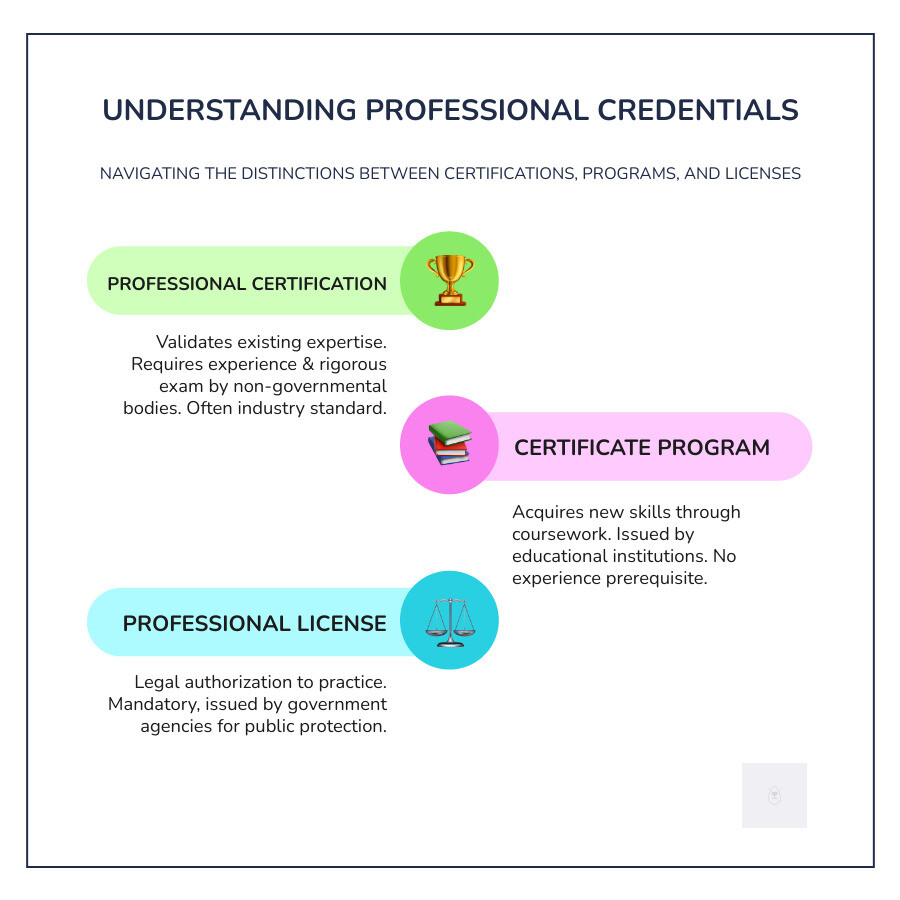
The Purpose of Certification is multifaceted, extending beyond mere skill validation to encompass professional development, ethical conduct, and public trust.
The Impact of Professional Certifications on Your Career and Salary
The decision to pursue a professional certification is an investment in your future, and its returns can be substantial, influencing everything from your earning potential to your career trajectory and standing with employers.
Boosting Your Earning Potential
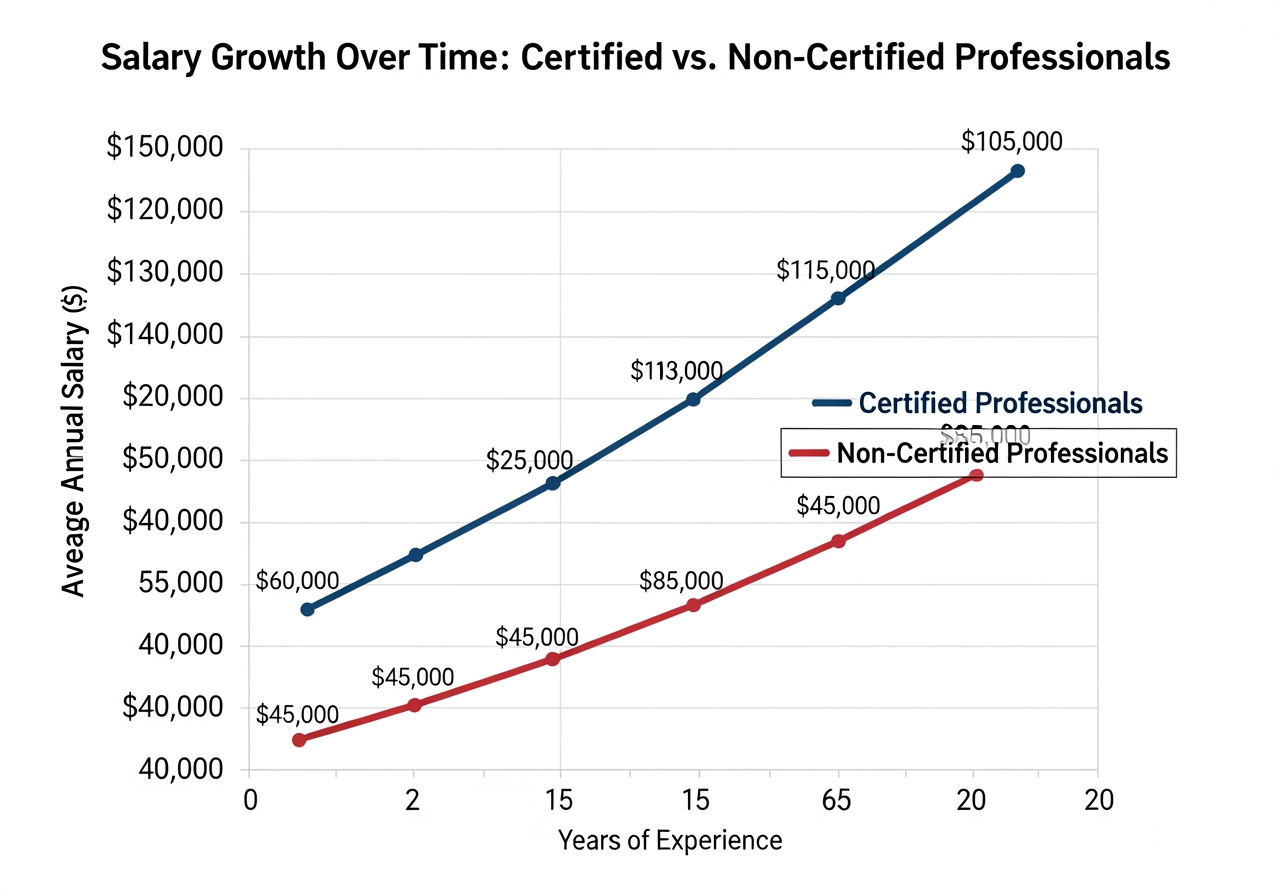
One of the most compelling benefits of professional certification is its direct impact on salary. Certified professionals often command higher wages than their non-certified counterparts, reflecting the specialized knowledge and proven competence they bring to the table. For instance, statistics show that the median salary for PMP holders in the U.S. is 32% higher than for those without the certification. This significant difference underscores the financial value employers place on such credentials.
This isn’t just about a one-time bump; certifications can set a higher earning baseline for your entire career, providing a strong return on investment (ROI) for the time and money spent. These credentials act as industry benchmarks, signaling to employers that you meet a recognized standard of excellence and are likely to be more productive and effective in your role.
Expanding Job Opportunities and Career Advancement
Beyond salary, certifications are powerful catalysts for expanding job opportunities and accelerating career advancement. In a competitive job market, a certification can differentiate you from other candidates, making your resume stand out. This is particularly true in rapidly growing fields. For example, employers will need to fill nearly 2.3 million new project-oriented roles each year through 2030, highlighting a significant demand for skilled professionals, many of whom will benefit from project management certifications like the PMP or CAPM.
Certifications can also open doors to new roles and responsibilities, even enabling significant career shifts. We’ve seen inspiring stories of individuals who, after completing a certification, moved into entirely different career paths or secured leadership positions, such as Larisa, who found a new career path and leadership role after earning her professional certificate. Such testimonials highlight how certifications can provide the confidence and credibility needed for such transitions. You can read more about Larisa’s journey to a new career path by visiting this Finding new career path story.
The benefits extend to personal growth as well. A Pearson VUE Candidate Report from 2023 indicates that 91% of certification candidates who earned a credential are more confident in their abilities. Furthermore, 77% of certified candidates reported being better able to innovate after earning their certifications. This boost in confidence and innovative capacity directly translates to improved performance and greater leadership potential in the workplace.
Gaining a Competitive Edge for Employers
For employers, professional certifications are invaluable tools for talent identification and development. They provide a reliable, third-party verification of an individual’s skills, reducing the risk in hiring and promoting decisions. In fact, 70% of organizations believe industry-recognized credentials are essential or very important tools for skills training. This statistic, highlighted in an IDC Infobrief, underscores the critical role certifications play in an organization’s strategy for maintaining a skilled workforce. You can find more details in this IDC Infobrief, Published June 2024.
By hiring certified professionals, companies can ensure a higher baseline of expertise, which contributes to increased productivity, efficiency, and overall project success. This is particularly crucial as technology continues to evolve rapidly, requiring a workforce that can adapt and innovate. Melissa Mulholland, CEO of Crayon, emphasizes this point, stating that demonstrated certifications can lead to individuals being given chances to prove themselves in new roles. This proactive approach to talent management, bolstered by certifications, helps organizations remain competitive. Read more about how Crayon is strengthening a global company through such strategies.
The Path to Earning a Professional Certification
Starting on the journey to professional certification requires careful planning and dedication. While the specific steps vary by credential, a general pathway involves meeting eligibility criteria, preparing for and passing an exam, and committing to ongoing maintenance.
Meeting the General Requirements
Most professional certifications have specific prerequisites that candidates must meet before they can even apply. These typically fall into two categories:
- Education: Many certifications require a certain level of formal education, such as a bachelor’s degree, or completion of specific training courses.
- Work Experience: A significant component for many advanced certifications is documented work experience in the relevant field. This ensures that candidates possess practical, real-world application of their knowledge.
For example, to be eligible for the highly respected Project Management Professional (PMP) certification, candidates need either a four-year degree and 36 months of project leadership experience, or a high school diploma and 60 months of experience. Both paths also require 35 hours of project management education. Details on these requirements can be found on the PMP requirements page. Similarly, the Certified Business Analysis Professional (CBAP) certification demands at least 7,500 hours of business analysis experience within the last 10 years. You can review the specifics for this credential on the CBAP requirements page.
The application process typically involves submitting documentation to verify your education and experience, followed by approval from the certifying body before you can schedule your exam.
Navigating Costs and Time Commitments
Obtaining a professional certification involves both financial and time investments. Understanding these commitments upfront is crucial for planning.
- Costs: Fees can include application fees, exam fees, and costs for study materials or preparatory courses. For instance, the PMP certification exam fee is $425.00 for members and $595.00 for non-members. Professional Certificate programs on platforms like edX typically range from $500-$1,500, while Coursera offers programs starting at $49 USD per month.
- Time: The duration of preparation can vary widely. Some certifications might require weeks of intensive study, while others, particularly those with extensive experience requirements, might involve months or even years of preparation. Professional certificate programs on edX typically last 2-10 months, offering a structured learning path.
Many candidates opt for preparatory courses, study guides, and practice exams to increase their chances of success. It’s important to factor in the cost and time for these resources when planning your certification journey.
Maintaining Your Credential
Earning a certification is often not a one-time event; most require ongoing maintenance to ensure your skills remain relevant and up-to-date. This typically involves:
- Continuing Education Units (CEUs) or Professional Development Units (PDUs): Certifying bodies require professionals to earn a certain number of CEUs or PDUs within a specific renewal cycle (e.g., every 2-3 years). These units are earned through various activities such as attending workshops, webinars, conferences, teaching, or completing further educational courses.
- Renewal Fees: There are usually fees associated with renewing your certification.
This commitment to lifelong learning is a hallmark of certified professionals, demonstrating their dedication to staying current in rapidly evolving fields. For professionals in healthcare, for example, maintaining credentials often involves specific continuing education requirements to ensure patient safety and adherence to the latest medical practices. Resources that help professionals meet these ongoing educational needs are invaluable. For comprehensive options and guidance on fulfilling continuing education requirements for professional certifications, consider exploring providers focused on specialized fields, such as Continuing education professional certification.

In-Demand Professional Certifications Across Key Industries
The demand for specialized skills is constantly shifting, making certain professional certifications highly sought after by employers. Here, we highlight some of the most impactful certifications across various industries.
Project Management
Project management is a critical function in nearly every industry, and certified project managers are in high demand.
- Project Management Professional (PMP): Widely regarded as the gold standard for project managers, the PMP certifies an individual’s ability to lead and direct projects and teams. It covers predictive, agile, and hybrid approaches, making it versatile across different project methodologies. We encourage aspiring project leaders to explore the application process for this prestigious credential at Apply for Your PMP.
- Certified Associate in Project Management (CAPM): Ideal for those new to project management, the CAPM demonstrates an understanding of the fundamental knowledge, terminology, and processes of effective project management.
Information Technology (IT) and Data Science
The IT sector is a hotbed for certifications, reflecting its rapid evolution and the need for specialized technical skills.
- CompTIA Certifications: CompTIA offers a suite of vendor-neutral certifications covering foundational IT skills (e.g., CompTIA A+), cybersecurity (e.g., Security+), networking (e.g., Network+), and cloud computing. These are excellent entry points and career accelerators in IT. Learn more about their offerings at CompTIA.
- Cisco Certified Network Associate (CCNA): A fundamental certification for network engineers, validating skills in installing, configuring, operating, and troubleshooting medium-sized routed and switched networks.
- Open Certified Data Scientist (Open CDS): This certification from The Open Group validates the skills and capabilities required to produce effective analytical solutions, making it highly relevant in the data-driven world. Find more about this comprehensive certification at Open Certified Data Scientist (Open CDS).
Finance and Accounting
In the finance and accounting world, certifications denote a high level of ethical conduct and specialized expertise.
- Certified Public Accountant (CPA): Essential for accountants who wish to perform audits, prepare taxes, and provide financial advice to the public. CPA requirements vary by state but typically involve education, experience, and passing a rigorous four-part exam. Detailed information on the exam and requirements can be found at CPA certification requirements.
- Chartered Financial Analyst (CFA): A globally recognized credential for investment professionals, covering investment tools, asset valuation, portfolio management, and wealth planning.
Security and Compliance
With increasing cyber threats and regulatory complexities, certifications in security and compliance are more critical than ever.
- Certified Information Systems Security Professional (CISSP): A highly respected certification for experienced security practitioners, validating expertise across various security domains.
- Certified Ethical Hacker (CEH): For professionals who want to understand and identify vulnerabilities in systems by thinking like a hacker, but ethically.
- Government-Recognized Professional Certifications: Beyond IT security, there are numerous government-recognized professional certifications in fields like homeland security, intelligence analysis, and forensic investigation. These credentials often signify a deep understanding of complex regulations and best practices within public sector and national security domains. For those interested in pursuing credentials that are officially recognized for their rigor and relevance in government and intelligence sectors, exploring specialized institutions can be beneficial. A valuable resource for various government-recognized professional certifications is often provided by organizations such as the Government-recognized professional certification.

Choosing and Showcasing Your Certification
Selecting the right professional certification and effectively showcasing it are crucial steps in leveraging its full potential for career acceleration.
How to Choose the Right Professional Certification
The sheer number of available certifications can be overwhelming. To make an informed choice, consider these factors:
- Align with Career Goals: What are your short-term and long-term career aspirations? Choose a certification that directly supports these goals.
- Research Industry Demand: Investigate which certifications are most valued in your target industry or role. Job descriptions often list preferred or required certifications.
- Assess Prerequisites: Honestly evaluate whether you meet the educational and experience requirements. Don’t pursue a certification you’re not yet eligible for.
- Consider Cost vs. Benefit: Weigh the financial investment and time commitment against the potential career and salary benefits.
- Explore Provider Reputation: Opt for certifications from reputable and widely recognized organizations.
Platforms like Microsoft offer guidance to help you steer their various credentialing options, differentiating between Applied Skills and broader Certifications to help you choose the path that best fits your career goals. This strategic approach ensures you invest in credentials that will truly advance your professional journey. You can gain further insight into choosing the right credential for your specific needs by visiting Choose Your Microsoft Credential.
The Role of Online Learning Platforms
Online learning platforms have revolutionized access to professional development, making certifications more attainable than ever. They offer:
- Flexibility: Many programs are self-paced, allowing you to study around your work and personal commitments.
- Accessibility: You can access high-quality courses and materials from anywhere in the world, often from top universities and industry experts.
- Structured Curriculum: Platforms like Coursera and edX provide structured learning paths designed to prepare you for certification exams or to acquire specific job-ready skills.
- Community Support: Many platforms foster online communities where learners can connect, share advice, and collaborate. For example, the Professional Certificate Community on Coursera provides a space for learners to engage with peers and instructors.
These platforms often partner directly with certifying bodies or create programs that lead directly to industry-recognized certifications, streamlining the preparation process.
How to Showcase Your Professional Certification
Once you’ve earned your certification, make sure employers and colleagues are aware of your achievement.
- Resume: Create a dedicated “Certifications” section on your resume, listing the certification name, issuing body, and date of acquisition. If space is limited, you can integrate it into your “Education” or “Skills” section.
- LinkedIn Profile: Update your LinkedIn profile to include your certification under the “Licenses & Certifications” section. This is also a great place to link to the certifying body’s website or display a digital badge.
- Email Signature: Include the abbreviation of your certification after your name in your professional email signature (e.g., Jane Doe, PMP).
- Professional Bio: Mention your key certifications in your professional bio for websites, presentations, or networking events.
- Digital Badges: Many certifying bodies offer digital badges that can be easily shared across social media, email, and digital portfolios, providing a verifiable credential.

Conclusion: Invest in Your Professional Future
Professional certifications are more than just pieces of paper; they are powerful tools that validate your expertise, improve your earning potential, and accelerate your career trajectory. When industries are constantly evolving, the commitment to continuous learning demonstrated by pursuing and maintaining certifications is invaluable.
By understanding the distinctions between certifications, certificate programs, and licenses, and by strategically choosing credentials that align with your career goals, you can position yourself for success. The benefits are clear: higher salaries, expanded job opportunities, increased confidence, and a significant competitive edge in the job market.
We encourage you to take the next step. Research the certifications most relevant to your field, explore the numerous online learning platforms available, and start on a journey that will not only improve your skills but also transform your professional future. Invest in yourself, and watch your career accelerate.