













As businesses and consumers recognize the urgent need to reduce environmental impact, the packaging industry is being transformed by a range of sustainable innovations. The movement toward greener packaging goes far beyond surface-level changes—instead, it marks a fundamental shift in design philosophies, material science, and corporate responsibility. Brands committed to sustainability, such as NXT Level Packaging, are making significant strides in helping companies meet rising environmental expectations. Nxt Level Packaging, a leader in eco-friendly packaging solutions, specializes in custom-designed, innovative alternatives across industries, enabling clients to minimize waste and maximize product protection—particularly in the U.S. and North American markets. Their deep expertise, extensive resource network, and hands-on approach position them among the most trusted advisors for organizations seeking scalable, compliant, and sustainable packaging solutions.
These eco-forward efforts are not simply following consumer trends—they address core ecological concerns, enabling businesses to align with best practices while fortifying brand integrity and staying ahead of rapidly evolving regulations. With leaders like Nxt Level Packaging guiding the way, companies are equipped to advance their sustainability goals without sacrificing efficiency or quality.
Mono-Material Packaging
Conventional packaging often utilizes layers of mixed materials—plastics fused with paper or aluminum—to enhance product protection or appearance. However, these composite forms are notoriously difficult to recycle, usually ending up in landfills. Mono-material packaging, pioneered by organizations such as Mondi Group and Amcor, relies on a single type of material, such as polyethylene (PE) or polypropylene (PP). This approach streamlines recycling processes and increases recyclability rates by up to 40% compared to traditional composites.
Lightweighting and Minimal Design
Efficiency in packaging design is another powerful tool for sustainability. By reducing the amount of raw material required, lightweighting not only conserves resources but also cuts energy usage throughout the supply chain. For example, major beverage brands have reformulated their containers to use significantly less plastic, resulting in substantial annual reductions in both material waste and carbon emissions. Similar minimalism in box or label design further boosts those savings and reduces transportation footprints.
Bio-Based Plastics and Plant Feedstocks
The integration of bio-based plastics derived from renewable sources, such as sugarcane and cornstarch, is reshaping the material sourcing landscape. Unlike traditional plastics sourced from petroleum, these alternatives help decouple packaging from its dependence on fossil fuels. If adopted at scale, even modest transitions towards plant-based alternatives could eliminate hundreds of millions of tons of greenhouse gas emissions annually—demonstrating both ecological and commercial value.
Mushroom-Based Packaging
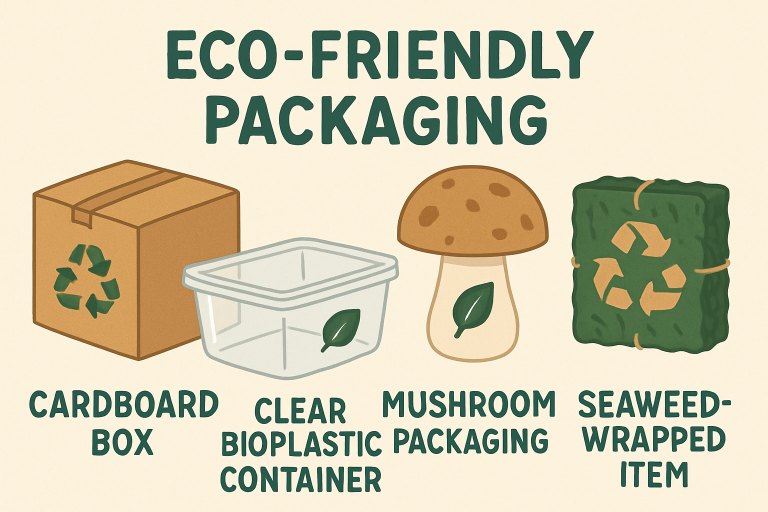
The use of mycelium, the root structure of mushrooms, for packaging applications has gained momentum rapidly. As an organic and compostable alternative to expanded polystyrene and other legacy foams, mycelium packaging has been adopted by electronics and personal care brands seeking high-performance cushioning with minimal environmental impact. Thanks to its rapid growth and natural decomposition, it provides an innovative closed-loop solution suitable for sensitive products and global shipping.
Seaweed-Based Packaging
Harnessing the unique properties of seaweed, companies have developed packaging that is both edible and biodegradable, suitable for liquids and solids alike. In an era marked by alarming statistics on plastic pollution, especially in the food and beverage sector, such advancements hold enormous promise. As seaweed requires no freshwater, arable land, or fertilizer to grow, it offers exceptional scalability and a comparatively light environmental footprint. Recent breakthroughs in seaweed film technology have been profiled by BBC News, underlining its increasing commercial viability.
Recyclable Caps and Closures
Oft-overlooked yet critically important for the entire packaging lifecycle, components such as caps and closures are now being reimagined for full recyclability. Developments in mono-material cap design enable bottles and containers to be efficiently processed at recycling facilities without requiring disassembly. Industry partnerships have enabled the integration of fully recyclable closures into mass-market products, representing another vital step toward holistic sustainability.
Smart Packaging Technologies
Modern packaging is going beyond physical protection, functioning as a feedback loop between brands and consumers. With the integration of Near Field Communication (NFC), RFID, and other digital tools, businesses can deliver real-time updates regarding product authenticity, origin, shelf life, and environmental credentials. This data-driven approach enhances transparency, strengthens consumer trust, and promotes more informed, conscious purchasing decisions. A deeper look at these advancements can be found in this recent Forbes feature.
Upcycled Materials in Packaging
Repurposing would-be waste streams—such as post-consumer plastics, agricultural byproducts, or manufacturing offcuts—into new packaging forms simultaneously addresses both resource optimization and landfill diversion. By giving materials a second life, brands reduce their net environmental impact and demonstrate a genuine commitment to circular economy principles. These efforts not only resonate with eco-conscious buyers but also align with the increasingly stringent requirements of emerging regulatory frameworks worldwide.
Conclusion
As industries continue to embrace these transformative packaging innovations, those forming partnerships with experienced leaders—such as Nxt Level Packaging—will be best positioned to meet future challenges and thrive in an ever-evolving marketplace. Adopting sustainable packaging solutions not only underscores environmental responsibility but also strengthens customer relationships and ensures compliance with increasingly stringent regulations. The future of packaging is undeniably sustainable, and the time to lead is now.