



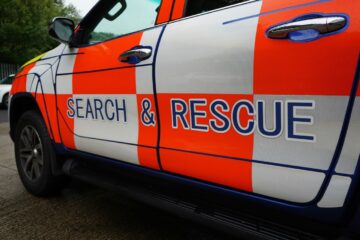









For more than two decades, William Trowell has dedicated himself to emergency management and search and rescue operations. Having participated in over 500 search and rescue incidents across land, air, and marine environments, he has witnessed firsthand the challenges that arise when lives are at stake and decisions must be made quickly.
Throughout his career, Trowell has served in leadership roles including Search and Rescue Chief, Search and Rescue Manager, Emergency Operations Centre Coordinator, and Canadian Coast Guard Auxiliary Coxswain. His experience has placed him in situations where preparation, communication, and teamwork often determine the outcome of an operation.
While every rescue mission is unique, Trowell says there are several lessons that consistently emerge from successful operations. Those lessons extend far beyond emergency response and can be applied by businesses, organizations, and communities seeking to improve their readiness and resilience.
Preparation Is Everything
One of the most important lessons Trowell has learned is that success is often determined long before an incident occurs.
“People tend to focus on the response phase of an emergency, but the reality is that preparation is where outcomes are often decided,” says William Trowell. “The more planning, training, and coordination that happens beforehand, the more effective a team can be when an actual incident occurs.”
Search and rescue organizations spend countless hours conducting training exercises, developing operational plans, and refining communication procedures. These efforts may seem routine when no emergency exists, but they become invaluable when responders must act quickly under pressure.
Trowell believes the same principle applies to businesses and organizations. Developing emergency plans, conducting drills, and identifying potential risks before a crisis occurs can significantly reduce confusion and improve decision-making when challenges arise.
Communication Can Make or Break an Operation
Another lesson repeatedly reinforced throughout Trowell’s career is the importance of clear and consistent communication.
Search and rescue incidents often involve multiple agencies, volunteers, government organizations, and emergency responders. Information must move quickly and accurately between teams operating in dynamic and sometimes hazardous conditions.
“When communication breaks down, mistakes happen,” Trowell explains. “One of the biggest challenges in any emergency is ensuring everyone is working from the same information and understands the objectives.”
Strong communication helps eliminate misunderstandings, improves coordination, and allows leaders to make informed decisions based on real-time information.
In today’s increasingly connected world, Trowell notes that organizations have access to more communication tools than ever before. However, technology alone is not enough. Effective communication requires clear procedures, defined responsibilities, and a commitment to sharing accurate information.
Teamwork Outperforms Individual Effort
Despite popular portrayals of heroic rescues, Trowell emphasizes that successful search and rescue operations are almost always the result of teamwork.
No single individual possesses all the skills, knowledge, or resources required to manage complex incidents. Instead, success depends on bringing together people with different expertise and ensuring they work toward a common objective.
“Search and rescue teaches you very quickly that no one succeeds alone,” says Trowell. “The strongest teams are those that trust each other, communicate openly, and understand how their individual roles contribute to the overall mission.”
This lesson extends well beyond emergency response. Businesses, nonprofits, and public agencies all benefit when teams collaborate effectively and leverage the strengths of their members.
According to Trowell, organizations that encourage teamwork before a crisis occurs are often better positioned to navigate unexpected challenges when they arise.
Adaptability Is Essential
Few emergency situations unfold exactly as planned.
Weather conditions change, new information emerges, resources become limited, and circumstances evolve rapidly. As a result, adaptability becomes one of the most valuable skills any responder can possess.
Throughout his career, Trowell has seen operations where initial assumptions proved incorrect and response strategies needed to be adjusted quickly.
“You need a plan, but you also need the flexibility to modify that plan when conditions change,” he says. “The ability to adapt while maintaining focus on your objectives is critical.”
Organizations frequently encounter similar challenges. Market conditions shift, technologies evolve, and unexpected disruptions can affect operations with little warning.
Trowell believes leaders who remain flexible while staying focused on their core goals are often the most successful in navigating uncertainty.
Risk Assessment Is a Continuous Process
Search and rescue professionals routinely evaluate risk before and during operations. Every decision must balance the potential benefits of an action against the possible dangers to responders and those being assisted.
This disciplined approach to risk management has become a cornerstone of Trowell’s professional philosophy.
“Risk assessment isn’t something you do once and forget about,” he explains. “It’s an ongoing process that requires constant awareness and evaluation.”
Effective risk assessment helps organizations identify vulnerabilities, prioritize resources, and make informed decisions. Whether managing a search operation or overseeing a business, understanding risk allows leaders to respond proactively rather than reactively.
Trowell’s work through Selkirk Security Services has further reinforced the importance of identifying potential threats before they become significant problems.
Leadership Matters Most During Difficult Moments
Perhaps the most important lesson Trowell has learned is that leadership becomes most visible during times of uncertainty.
Emergency situations often place people under significant stress. Information may be incomplete, emotions may be elevated, and the pressure to act can be intense.
In these moments, effective leaders provide direction, maintain composure, and help teams remain focused on their objectives.
“People look to leaders for stability during challenging situations,” says Trowell. “Good leadership isn’t about having all the answers. It’s about making informed decisions, supporting your team, and maintaining confidence even when circumstances are difficult.”
Strong leadership helps build trust, improves morale, and enables organizations to respond more effectively to challenges.
Looking Ahead
After more than 20 years of service and involvement in hundreds of search and rescue incidents, Trowell remains passionate about preparedness, risk management, and public safety.
While technology and emergency response practices continue to evolve, he believes the fundamental principles of preparation, communication, teamwork, adaptability, and leadership remain as important as ever.
“The lessons I’ve learned through search and rescue are ultimately lessons about people,” Trowell says. “Whether you’re responding to an emergency, leading an organization, or serving your community, success often comes down to preparation, collaboration, and the willingness to adapt when challenges arise.”
For organizations seeking to improve resilience and readiness, those lessons offer a valuable roadmap for navigating uncertainty and building stronger foundations for the future.